Cairns History
From ancient Indigenous heritage to modern tropical paradise - discover the fascinating story of Cairns and the Atherton Tablelands
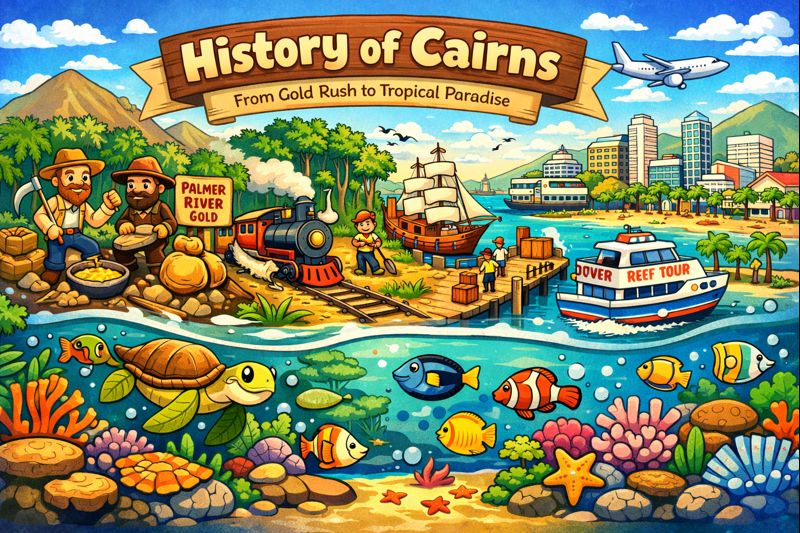
Indigenous History – The First People
The Yidinji People
The Yidinji (also written Yirrganydji) are the Traditional Owners of the coastal lands around Cairns, including the shoreline, estuaries, and mangroves. Their deep knowledge of the sea and tidal environments made them expert fishers and traders, harvesting fish, dugong, and shellfish from these rich waters.
Yidinji language and song lines are intrinsically tied to the landscape, and many place names across the Cairns region derive from Yidinji words. Their oral traditions, ceremonies, and connection to country remain strong today.
"Gimuy" — the Yidinji name for Cairns — means "place of the sandfly," reflecting their intimate knowledge of the local environment long before European arrival.
The Djabugay People
The Djabugay (also written Tjapukai) are the Traditional Owners of the rainforest areas west of Cairns, including Kuranda, the Barron Gorge, and parts of the Atherton Tablelands. They are renowned for their rich cultural heritage, including dance, music, and the crafting of traditional tools and weapons.
The Djabugay language is one of the oldest continuously spoken languages in the world. Their deep connection to the rainforest guided sustainable land management practices — burning, harvesting, and cultivating — long before Western farming arrived.
The Tjapukai Aboriginal Cultural Park in Smithfield has shared Djabugay culture with millions of visitors, making it one of Australia's most significant Indigenous cultural experiences.
Culture, Language & Traditions
Song & Dance
Ceremonial corroborees, dance, and song carried history, law, and spiritual knowledge across generations.
Fire Management
Controlled burning of the landscape was used to manage vegetation, encourage new growth, and improve hunting.
Oral Traditions
Dreamtime stories explained the creation of the land, sea, and sky, and guided ethical and spiritual life.
Bush Medicine
Extensive knowledge of rainforest plants was used for healing, with many remedies still studied by modern researchers today.
Historical Timeline
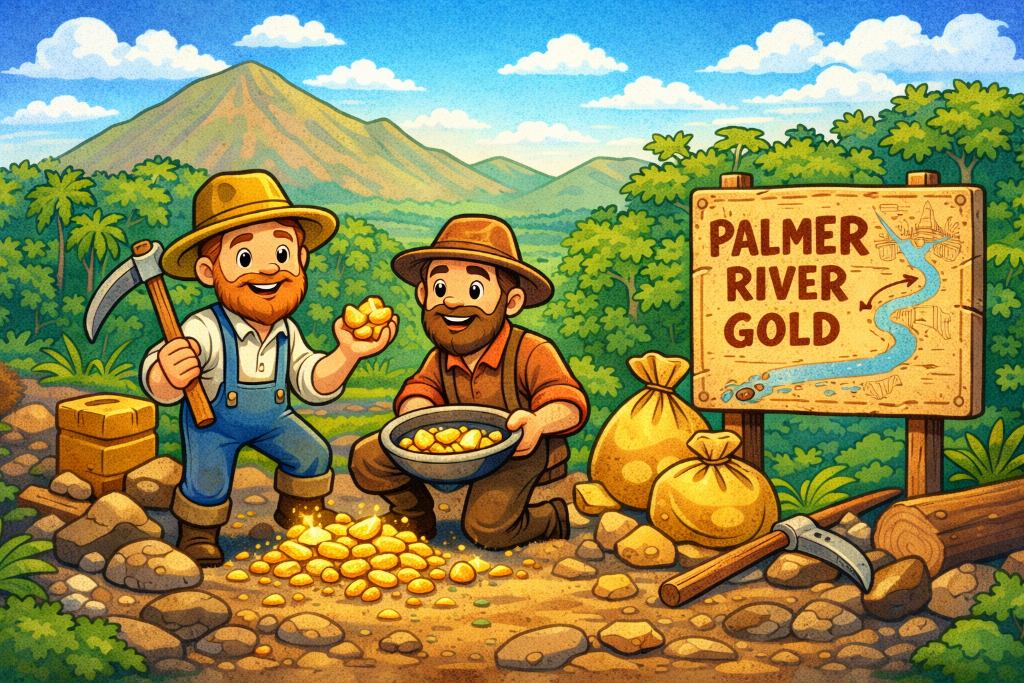
The Palmer River Gold Rush - a defining era in Cairns' early history
European Exploration
European exploration increased as settlers pushed north in search of resources and trade routes. The region was officially founded in 1876 and named after Sir William Wellington Cairns, Governor of Queensland.
Port Town Established
Cairns was established as a port town, chosen for its proximity to inland goldfields. Despite challenging swamps, heat, and tropical diseases, the location proved strategically valuable for trade and transport.
Rapid Growth from Gold
Discovery of gold at Palmer River and nearby regions drove early growth. Miners, merchants, and labourers flowed through the port. Roads, wharves, warehouses and hotels emerged despite floods, cyclones and disease.
Railway to Herberton
Construction of the railway line to Herberton began, opening up the Atherton Tablelands. This engineering achievement enabled large-scale agricultural development including sugar cane, bananas, dairy farming, and timber.
Strategic Military Base
Cairns became a vital military hub for Australian and Allied forces in the Pacific. Large influx of military personnel led to rapid construction of airfields, roads, and defence facilities, resulting in lasting infrastructure improvements.
Expansion & Modernisation
Improvements in transport, healthcare, education, and housing helped the city evolve. Opening of Cairns International Airport positioned the city as a global destination for the Great Barrier Reef and Wet Tropics Rainforest.
Global Gateway
Cairns is a vibrant, multicultural city known for its relaxed tropical lifestyle. It serves as a major tourism hub, regional business centre, and gateway to Far North Queensland and the Pacific.
Cairns Key Facts
Indigenous Heritage
The Yidinji and Djabugay peoples lived sustainably on this land for tens of thousands of years. Indigenous knowledge of the sea, mangroves, rainforest and reef enabled survival in what early settlers found challenging. Indigenous culture remains vital today.
Great Barrier Reef Gateway
Cairns is the closest major city to the Great Barrier Reef, one of the seven natural wonders of the world. It serves as the primary access point for reef tourism and marine research.
Tropical Location
Situated between rainforest and reef, Cairns is the only place on earth where two World Heritage sites meet - the Wet Tropics Rainforest and the Great Barrier Reef.
Multicultural Community
Modern Cairns is a vibrant multicultural city with strong connections to the Pacific region, drawing visitors and residents from around the world to its tropical lifestyle and economic opportunities.
The Atherton Tablelands
Rising sharply behind Cairns, the Atherton Tablelands is a fertile highland plateau that became one of Queensland's most important agricultural regions. From the gold rush era through to today, the Tablelands has fed, employed, and shaped the character of Far North Queensland.
Tobacco Farming
1920s – 1970s
Tobacco was one of the Tablelands' most significant crops for decades. Italian and Greek immigrant families were central to its cultivation, establishing tight-knit farming communities around Mareeba and Dimbulah. At its peak, the Tablelands produced a large share of Australia's domestic tobacco. The industry declined after the 1960s as imports increased and health campaigns reduced demand.
Dairy Farming
1890s – Present
The cool climate and fertile soils of the Tablelands made it ideal for dairy farming. Towns like Malanda, Millaa Millaa, and Atherton became dairy heartlands. The Malanda Dairy still operates today, supplying milk across Far North Queensland. Dairy farming shaped the character of many Tablelands communities and remains a key industry, alongside beef cattle grazing.
Coffee & Tropical Produce
1980s – Present
The Tablelands has emerged as one of Australia's premier coffee-growing regions. The volcanic soils, altitude, and tropical rainfall create ideal conditions for arabica coffee. Farms around Mareeba, Atherton, and Tolga now produce award-winning beans sold nationally and internationally. Alongside coffee, the region grows avocados, macadamia nuts, bananas, tropical fruits, and vegetables.
Towns of the Tablelands
Atherton
The major service town of the Tablelands, known for its heritage railway station and surrounding farmland.
Mareeba
The tobacco and coffee capital of the north, gateway to the Tablelands and home to a multicultural community.
Malanda
Famous for its dairy co-operative and the stunning Malanda Falls, a popular swimming hole.
Yungaburra
A charming heritage village with markets, platypus-watching, and some of the best preserved timber buildings in Queensland.
Millaa Millaa
Known as the "Village in the Clouds" and famous for its stunning waterfall circuit through the rainforest.
Tolga
A quiet township surrounded by farmland and home to the Tolga Scrub, a rare remnant of dry rainforest.
Cairns Today – A Global Gateway
Today, Cairns is a vibrant, multicultural city known for its relaxed tropical lifestyle, strong local economy, and connection to nature. It serves as a major tourism hub, a regional business and service centre, and a gateway to Far North Queensland and the Pacific.
While modern Cairns continues to grow and evolve, its history remains visible in its heritage buildings, museums, memorials, and community spirit.
Local organisations, museums, and cultural centres work to preserve and share Cairns' history for future generations. From Indigenous storytelling to early settler records and wartime memorials, the city's past is an important foundation for its future.
Understanding Cairns' history offers insight into the resilience, diversity, and innovation that define the region today. PRZ TAX & ACCOUNTING is proud to serve this historic community across Cairns and the Atherton Tablelands.